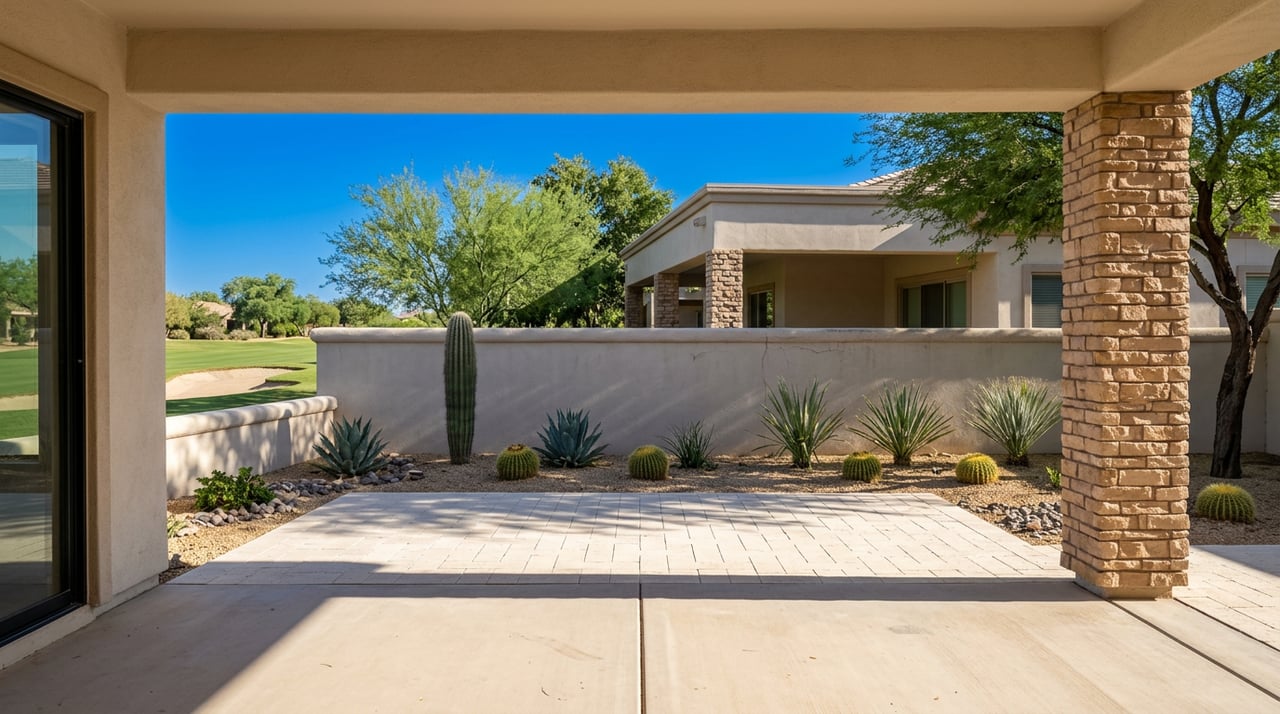
Picture your morning coffee with open fairway views, birds skimming over water, and sunsets that light up the sky. If you’re considering a golf-side home in Surprise, Coyote Lakes offers that relaxed desert feel with convenient access to shopping, dining and spring training nearby. In this guide, you’ll learn what living on the course really looks like here: the homes, the HOA and ARC process, view-fence privacy, risk factors like errant golf balls and drainage, and a buyer checklist to help you move with confidence. Let’s dive in.
Why Coyote Lakes appeals
The Coyote Lakes neighborhood sits near Bell Road and Coyote Lakes Parkway and is described by the community as a quiet desert setting close to everyday amenities and entertainment. You get the calm of a golf neighborhood with city convenience just minutes away. The 18-hole course shapes much of the neighborhood’s layout, which is part of the appeal for view-focused buyers.
If you like having options, you’ll appreciate that the golf club is open for public play and the community also has a resident-owned recreation club. That setup gives you flexibility to enjoy golf, social spaces, or both depending on your lifestyle.
For a quick feel of the community, start with the neighborhood’s own overview of life in Coyote Lakes on the official website at the Coyote Lakes community page.
The golf course at a glance
Layout, par and design
Coyote Lakes Golf Club is an 18-hole, par‑71 layout of roughly 6,100 to 6,300 yards with four tee sets. Designed by Forrest Richardson and Jack Snyder, the routing takes advantage of natural low areas and open space, which helps define where homes and lots sit around the fairways. You can read more about the course’s design and intent in the architect’s project notes.
Water features and drainage
Several holes incorporate lakes and the course functions in part as a drainage corridor for the subdivision. The fairway corridors generally sit lower than many surrounding homes. This design element adds scenic water and wildlife while serving a practical role during seasonal rains. If drainage performance is on your checklist, review the design background provided in the course architect’s overview and pair it with an in-person visit after a storm when possible.
Homes on the course
Ages, styles and floor plans
Most homes in Coyote Lakes were built in the mid‑1990s, commonly 1994 to 1998. You’ll mostly see single-story ranch and contemporary plans with 2 to 3 bedrooms. Original builders in the neighborhood include well-known national names from that period. This age profile means many homes have already seen updates to kitchens, baths, roofs, HVAC and windows over time.
Lots, fences and views
Typical lot sizes run from the mid‑6,000 square foot range up to around 9,000+ square feet on some corner or cul‑de‑sac properties. Golf-side properties often use low “view” fencing such as wrought iron or partial block to preserve sight lines across the fairway and toward sunsets. Other lots away from the course are more likely to have full-height block walls that maximize backyard privacy.
On golf-adjacent homes, you’ll balance open views with privacy. Expect more visibility into and out of a view-fenced yard. If you prefer a more secluded backyard, you may choose a non-golf lot or a location where a full wall is allowed by the guidelines.
Outdoor living and orientation
Backyards here often feature extended covered patios, shade awnings and built-in barbeques, and many owners add modest plunge pools or spa combinations. Because summers are hot, shade and misters are common upgrades, and north or south orientations are frequently highlighted in listings for comfort. When you tour, stand in the backyard in late afternoon to feel the sun pattern and assess shade potential.
HOA, ARC and the rec club
What the HOA covers
Coyote Lakes is governed by a mandatory homeowners association that maintains common areas and enforces the neighborhood’s governing documents. The HOA outlines responsibilities and rules on its public “HOA 101” page. Before you make changes or budget for dues, review the association’s HOA overview.
Recent listings commonly show modest annual HOA fees, often in the mid‑$200s to mid‑$300s. These figures vary by year and listing, so confirm the current ledger and what “maintenance of common grounds” includes when you are under contract.
ARC approvals you will need
Most exterior projects require an Architectural Review Committee (ARC) submission. That includes repainting, patio enclosures, shade structures, major landscaping, fences and similar changes. The HOA publishes the paint-color palette and ARC contact direction, which is your starting point for any exterior plan. Review the ARC instructions and color information on the HOA’s paint and ARC page.
Optional rec club amenities
Separate from the HOA, the resident-owned Recreation Club offers pool access, tennis and pickleball courts, classes and social events. Membership is optional and operated independently. For schedules and membership policy details, visit the Coyote Lakes Recreation Club.
Course-side tradeoffs to weigh
Views and privacy
Golf-facing lots deliver wide green views, sunsets and, in some spots, White Tank Mountain sightlines. The tradeoff is reduced backyard privacy because view fences are designed to keep sight lines open. Decide what matters most to you. If privacy is your top priority, consider a non-golf location or plan for approved screening that fits ARC guidelines.
Golf balls, risk and repairs
Errant balls are a realistic, though usually occasional, part of living on the course. Home insurance often covers sudden accidental damage, but outcomes and deductibles vary. It’s smart to get a quote that notes golf-course adjacency and to ask how repeated claims are handled. The Insurance Information Institute provides plain-English guidance on coverage and risk in its consumer resources. You can also scan recent local coverage about damage near courses for added context, like this Arizona news report on rogue golf balls.
Netting, shade and fence rules
Some owners use temporary or approved netting to reduce golf-ball intrusion. Whether permanent netting, higher fences, sun shades or screen enclosures are allowed depends on the ARC rules and Arizona statutes. Always confirm acceptable fence heights and any netting before you plan a project, and expect to submit a formal ARC request.
Drainage and monsoon
Because parts of the course function as a drainageway, you should review seller disclosures for any history of water intrusion. Visit at different times of day and again after seasonal rains if possible. The course architect’s notes explain the drainage role of certain holes, which is helpful context as you evaluate lot elevation and backyard design.
Wildlife in the desert
Water features and nearby open space attract birds and desert wildlife. Arizona Game & Fish recommends simple steps like not feeding wildlife and securing refuse to reduce conflicts. If you plan to let pets out in the yard, review the state’s wildlife safety tips for suburban areas.
Utilities and solar
Public records and listings often note electricity from APS and water from a private water company. Always confirm the actual providers during due diligence and request 12 months of utility bills from the seller. Arizona law also protects your right to install solar energy devices, while allowing HOAs to adopt reasonable placement rules. If solar is on your wish list, skim the state’s homeowner-solar protections in A.R.S. §33‑1816 and talk with the ARC early.
Market snapshot and value cues
Neighborhood-level data in late 2025 showed a median listing price in the low to mid $300,000s for Coyote Lakes. Individual home values vary by lot location, golf frontage, interior updates, pool or spa, and outdoor-living features. Because prices shift with inventory and season, use current, hyperlocal comps right before you write an offer.
A few quick value cues to consider:
- Golf frontage with clear fairway views tends to command a premium over interior lots.
- North or south backyard orientations are often favored for shade and comfort.
- Updated roofs, HVAC, windows and exterior paint within the last 5 to 10 years reduce near-term maintenance.
- Backyard features like extended patios, shade structures and pool or spa setups can drive buyer interest.
Your buyer checklist
Use this list to stay organized before you tour or write an offer.
Request the HOA governing documents and design guidelines, plus ARC turnaround times and any fees. Review the association’s HOA overview.
Ask the management company for the current HOA ledger, reserve information and recent meeting minutes to gauge special-assessment risk. The City of Surprise maintains an HOA contact roll that includes the listed manager for Coyote Lakes; confirm details there or through the HOA site. If you need a starting point for area HOA contacts, see the city’s contact resource.
Confirm Recreation Club membership is optional and request current dues, guest policies and any waitlist notes. Visit the Coyote Lakes Recreation Club.
Clarify maintenance responsibilities. Ask what the HOA maintains versus what the homeowner maintains, including front-yard standards, desert landscaping requirements and irrigation.
Ask about golf-ball history and any mitigation, such as nets, tree buffers or tee-box adjustments. For context, review a recent local news report on golf-ball damage near courses.
Get a homeowners insurance quote that notes golf-course adjacency and ask about deductibles and repeated-claim policies. The Insurance Information Institute’s overview provides helpful background.
Verify utility providers and request 12 months of water and electric bills to understand usage and cost patterns.
Check for any local improvement district or special assessments on the parcel through county tax records. Start with the Maricopa County Assessor’s bond and assessment abstract.
Walk the property at different times: sunset for view lines and glare, and during or after seasonal rains to see how water moves across the lot. The course design notes explain why this matters.
Confirm rules for nets, shade structures, screen rooms and solar with the ARC. Review the HOA’s paint and ARC guidance.
Ready to see Coyote Lakes in person?
If fairway views, easy outdoor living and a flexible amenity setup are on your list, Coyote Lakes is worth a close look. You’ll want local insight on lot orientation, drainage, ARC approvals and market pricing to choose the right home and avoid surprises. When you are ready to tour, compare comps or talk through offer strategy, reach out to Suzanne Ross for neighborhood-first guidance backed by the latest market data.
FAQs
Is the Coyote Lakes golf club private or public?
- The course is open to the public for tee times, and the neighborhood also has a separate, resident-owned Recreation Club that is optional for homeowners.
What does the Coyote Lakes HOA do for residents?
- The HOA maintains common areas and enforces CC&Rs and design guidelines through an ARC process; review the association’s HOA overview for details.
Do I need ARC approval to add shade or change paint?
- Yes. Most exterior changes require ARC approval, including paint, patio enclosures, fences and shade structures; start with the HOA’s paint and ARC page.
Are HOA fees high in Coyote Lakes?
- Recent listings often show modest annual dues, commonly in the mid‑$200s to mid‑$300s, but you should verify the current ledger and any separate Recreation Club dues.
How risky are errant golf balls at course-side homes?
- Stray balls do occur, generally infrequently; review any history with the seller, ask about mitigation and get an insurance quote. See the Insurance Information Institute’s guidance.
What wildlife should I expect around the course?
- Birds and desert wildlife are common near water and open space; follow Arizona Game & Fish tips to reduce conflicts.
Can the HOA stop me from installing solar panels?
- Arizona law protects your right to install solar energy devices, while allowing reasonable placement rules; see A.R.S. §33‑1816 and confirm ARC procedures before you start.